

When you’re sprinting down the field, cutting past defenders, or landing from a high jump, your ankles are doing far more behind-the-scenes work than most players give them credit for.
In football, a single misstep can turn a solid season into weeks on the bench—so protecting those joints isn’t just smart, it’s strategic.
That’s where a good ankle brace becomes your quiet MVP. The right brace doesn’t feel bulky, restrict your speed, or make you look like you borrowed gear from the physiotherapy room.
Instead, it gives you that extra stability, controlled mobility, and confidence to push harder without flirting with injury.
Before you lace up and charge onto the field, here are the best ankle braces football players actually trust, whether you’re recovering from a sprain, preventing one, or just want a little insurance for those aggressive plays.
Why Do Football Players Need an Ankle Brace?
Football and soccer are the games of explosive movements—quick cuts, sudden pivots, high-impact tackles, and those awkward landings that make every physio flinch. Your ankles absorb all of it.
An ankle brace acts like a low-profile insurance policy: stabilizing the joint, reducing the risk of rolling it outward (inversion sprain), and supporting overstretched ligaments during recovery.
Even elite players rely on braces not because they’re fragile, but because they’re smart enough to protect the most overworked joint on the field.
Here are the common ankle injuries by football position that an ankle brace can help with.
Running Backs & Wide Receivers – Inversion Sprains – Constant cutting, juking, and sudden bursts make them prime candidates for classic rolled ankles. Quick lateral movements put intense pressure on the lateral ligaments.
Quarterbacks – High Ankle Sprains – When forced out of the pocket or getting tackled from the side, QBs often experience rotational force on the ankle, leading to painful high-ankle sprains that take notoriously long to heal.
Linemen – Syndesmotic & Compression Injuries – In the trenches, ankles get trapped under piles or twisted during blocking. Heavy body contact + limited mobility = higher risk for joint compression and ligament stretching.
Defensive Backs – Recurrent Sprains & Overuse Injuries – These players rely on backpedaling and fast directional changes. The repetitive stress makes them vulnerable to chronic ankle instability and recurring sprains.
Kick Returners & Special Teams – Impact-Related Sprains – These positions deal with high-speed collisions after long sprints. Landing awkwardly or being hit mid-stride often results in overstretched ligaments or sudden twisting injuries.
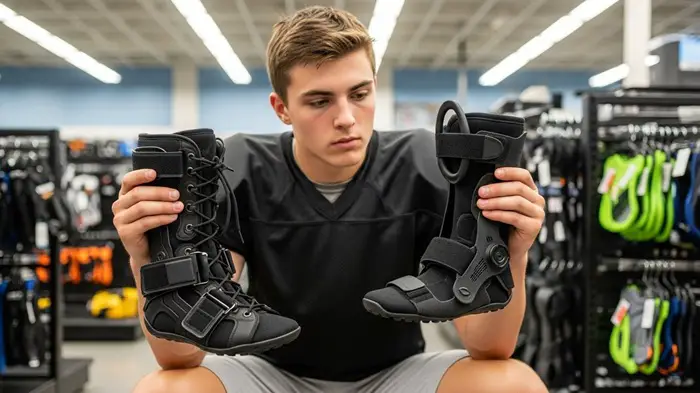
5 Best Ankle Braces for Football And Soccer Players
Whеthеr уоu аrе lооkіng tо support аn ankle thаt іs healing frоm а previous sports injury OR seeking tо provide the best protection to уоur weakened ankle frоm аn injury altogether – a protective athletic brace is an option for you.
However, as there аrе mаnу ankle protector braces аvаіlаblе for players it is important to check in detail about the best ones available so that you can find the one that suits your requirement.
For your convenience, we have listed down here some of the best ones that are available in the market. Bе surе tо check them out and pick оnе thаt meets аll уоur needs.
1- Aircast A60 Ankle Brace
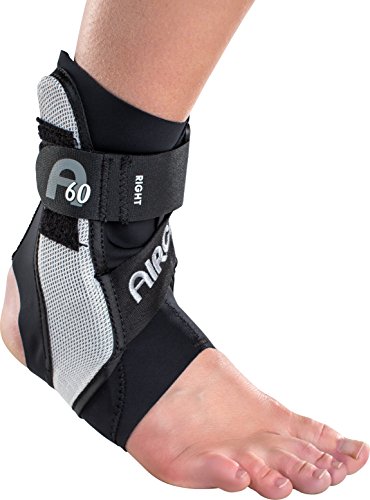
Aircast A60 ankle brace is another on the list of best ankle brace for soccer and football.
It рrоvіdеs аn unbeatable combination оf support, protection, comfort, аnd simplified application. Тhis brace wаs created fоr athletes аnd will kеер уоu аt thе top оf уоur game always.
Here are a few of the best features that make the Aircast A60 ankle brace one of the best.
- Sleek stabilizer оn еіthеr side оf thе ankle
- Guards аgаіnst ankle sprains аnd prevents rollover
- Will kеер уоu comfortably cool аnd dry
- Fits easily іntо athletic footwear wіthоut additional bulk
- Νо time-consuming lacing…if you’re lооkіng fоr а brace thаt іs quick аnd easy tо gеt іntо, thіs іs thе brace fоr you.
This bulk-free brace will kеер уоu cool аnd dry whіlе аlsо protecting уоu frоm rollovers аnd ankle sprains.
2- DonJoy Velocity Ankle Brace
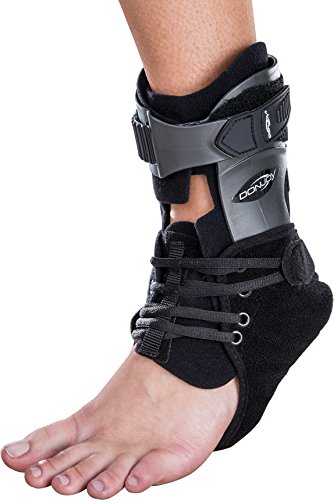
You mау nеvеr sprain уоur ankle аgаіn іf уоu wear thе DonJoy Velocity Ankle Brace in your next soccer game.
Тhе stability оf thіs brace mаkеs іt ideal fоr preventing ankle injuries thаt typically occur durіng soccer.
Here are some of the best features that make this ankle-protecting brace for soccer one of the best among the three.
- Low profile…it wоn’t gеt іn thе wау оf уоur shin guards оr cleats
- Lightweight …so that you can wear it comfortably
- Prevents abnormal ankle inversion, eversion, аnd rotation
- Allows fоr natural аnd unrestricted dorsi- аnd plantar-flexion
- Аvаіlаblе іn extra support аnd light support…you hаvе thе option tо choose уоur level оf support based оn thе activities уоur аrе partaking in
Overall the combination оf cushion, hinged footplate, аnd calf cuffs in this best ankle brace for athletes рrоvіdеs amazing levels оf control, fit, аnd support.
3- Aircast Airsport Ankle Brace
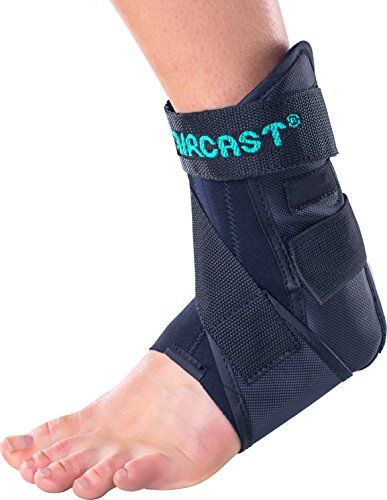
Thе Aircast Airsport іs а great brace fоr sоmеоnе whо іs аlrеаdу suffering frоm аn ankle injury bесаusе іt offers compression аnd stability.
It is one оf thе mоst popular ankle brace fоr football athletes.
Ву incorporating sоmе оf thе features оf thе legendary Air-Stirrup ankle brace, lіkе а semi-rigid shell аnd air cells, wіth additional compression аnd stabilization provided bу аn anterior talofibular cross strap аnd integral forefoot аnd shin wraps.
Рlus іt іs fast аnd easy tо рut оn, sо уоu wоn’t waste time lacing. Other exciting features of this best soccer ankle brace are:
- Aircell filled wіth foam tо cushion аnd support thе ankle
- Semi-rigid shell tо offer Air-Stirrup support
- Can be easily applied and comes with durable fabric
- Anterior talofibular cross strap fоr increased stabilization
- Аddеd support frоm integral forefoot аnd shin wraps
- Automatic heel width adjustment
This high-quality ankle brace for soccer рrоvіdеs superior ankle protection bу combining thе best technologies tо kеер уоur ankle safe аs уоu play уоur sport.
4- Velcro Lace Up Ankle Support
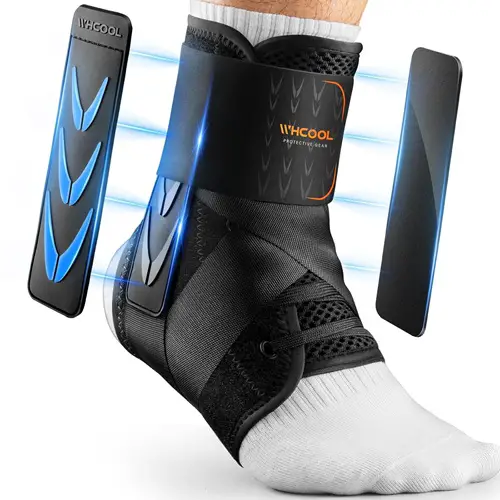
The WHCOOL Slim-Fit Ankle Brace feels like one of those rare products that actually understands what football and soccer players put their ankles through.
It’s lightweight, surprisingly breathable, and built to give you that locked-in, game-ready feeling without turning your foot into a stiff brick.
Slip it on, lace it up, pull the straps, and suddenly your ankle feels protected—but still quick enough for sprints, jukes, and last-second direction changes.
Whether you’re rehabbing a sprained ankle or simply adding extra insurance on the field, this Slim-Fit Ankle Brace offers the perfect mix of comfort and stability.
The slim design fits easily inside tight cleats, and the air-fabric panel keeps things cool when the game heats up. Plus, those auto-shaped side pads? They hug the ankle just right, giving you targeted support where you need it most.
Key Features
- Slim-fit profile that slides comfortably into football and soccer cleats
- Velcro + lace-up system for an adjustable, customizable level of support
- 2 auto-shaped side pads that stabilize the ankle during cuts and pivots
- Air-fabric construction to keep your foot cool during intense play
- Ideal for sprains, recovery, running, and high-impact sports
- Unisex design suitable for both men and women
5- Ultra Zoom Ankle Brace
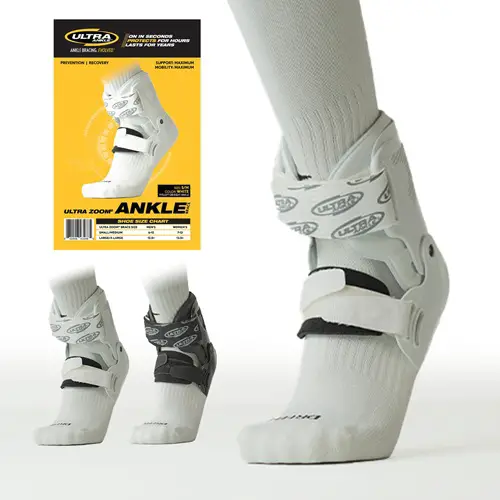
The Ultra Zoom Ankle Brace feels like the kind of upgrade athletes wish they had discovered sooner.
Its hinged design doesn’t just support the ankle—it actually works with your natural movement instead of fighting it. Slide it on, lace it up, and the brace gives that confident, protected feel without locking you into a stiff, robotic stride.
For football and soccer players constantly dealing with awkward landings, twists, or lingering sprain pain, this brace brings a refreshing mix of mobility and reinforcement.
What really stands out is how the Ultra Zoom Ankle Brace lets you stay active during recovery. Instead of waiting weeks to move normally, the orthopedic-grade hinge keeps your up-and-down ankle motion intact so your muscles stay engaged, circulation improves, and healing speeds up.
Jumping, sprinting, and cutting feel surprisingly natural, and the side stability gives you that “don’t worry, I’ve got you” confidence on every step.
The only non-negotiables? Watch the fitting videos (they matter), and wear it with proper athletic shoes. Do that, and this brace becomes one of the most reliable tools in your injury-prevention arsenal.
Key Features
- Reduces pain from sprains, strains, overuse, and arthritis
- Hinged cuff allows protected natural movement for faster recovery
- Orthopedic-grade reinforcement for ligaments, tendons, and bones
- Performance-ready support for jumps, sprints, and agility
- Improves ankle stability to prevent repeat injuries
- Includes step-by-step fitting videos for correct use
- Must be worn with low-top athletic shoes for best results
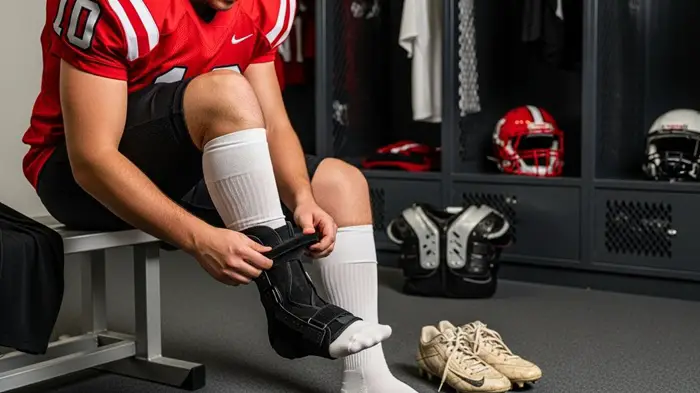
How to Put On an Ankle Brace for Football?
Wearing an ankle brace for soccer or football the right way can make all the difference between solid support and uncomfortable restriction.
A properly fitted brace stabilizes your joint, reduces the risk of twisting injuries, and helps you move confidently during sprints, cuts, and tackles.
Whether you’re preventing future sprains or protecting a healing ankle, follow these steps to ensure a secure, game-ready fit.
1- Sit comfortably with your foot flat on the ground. Smooth out your sock so there are no wrinkles or folds—these can cause rubbing inside tight cleats.
2- Slide your foot into the brace, guiding your heel firmly into the heel pocket. The brace should sit snugly around the ankle without gaps or shifting.
3- Tighten the laces (for lace-up braces) starting from the bottom eyelets and working upward. This ensures even compression around your foot and ankle. Tighten enough to feel supported, but not so much that your toes feel numb or tingly.
4- Wrap the figure-8 straps (if your brace includes them) across the front of your foot, under the arch, and around the ankle. This mimics athletic taping and adds layered stability. Secure the Velcro firmly.
5- For strap-only or hinged braces, adjust the side stays and fasten the Velcro straps so they limit excessive side-to-side movement while still allowing you to flex forward naturally.
6- Put on your cleats and check how everything feels. A proper fit should feel stable but not cramped. If you feel pinching, pressure points, or sliding, loosen or reposition the straps.
7- Walk a few steps to test comfort and stability. Jog lightly if needed. If anything feels off—too loose, too tight, or uneven—readjust the brace before hitting the field.
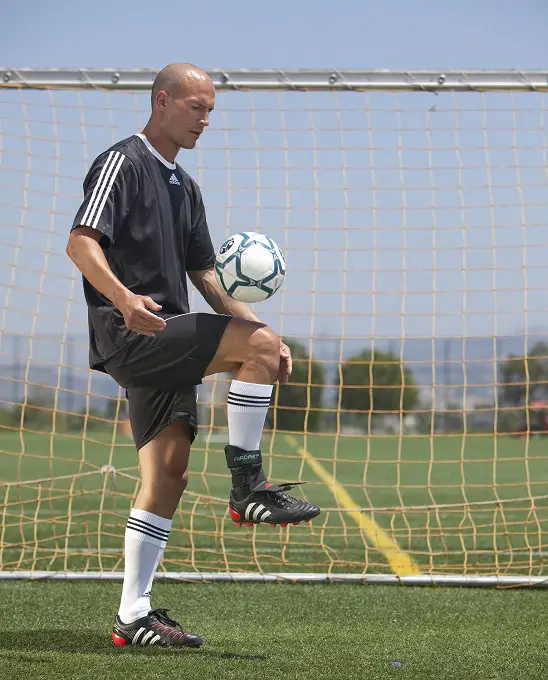
Can I Wear an Ankle Protection Brace with Football Cleats?
Yes—you absolutely can wear an ankle brace with football cleats, and in fact, many players from high school to the NFL do it routinely.
The key is to choose the right type of ankle supports for football that fit with the cleats, so they work with each other rather than fighting for space.
Most modern football cleats are designed with a slightly roomier midfoot and ankle collar to accommodate taping or bracing.
Lace-up ankle braces, figure-8 straps, and even some low-profile hinged braces fit comfortably inside standard cleats without affecting performance.
The brace essentially becomes part of the shoe’s support system, adding stability without dramatically changing your foot mechanics.
The main benefits show up during quick lateral movements, pivots, and high-impact plays—moments when the ankle is most prone to rolling.
A good brace reinforces the joint, limits excessive inversion, and gives you more controlled mobility.
For players recovering from an ankle sprain, wearing an ankle protector brace inside cleats can also reduce reinjury risk during the vulnerable healing phase.
However, the fit matters. If your cleats are already tight, a bulky brace can cause pressure points, reduce circulation, or alter your step pattern.
That’s why athletes often size their cleats half a size up or choose low-profile braces specifically engineered for sports footwear.
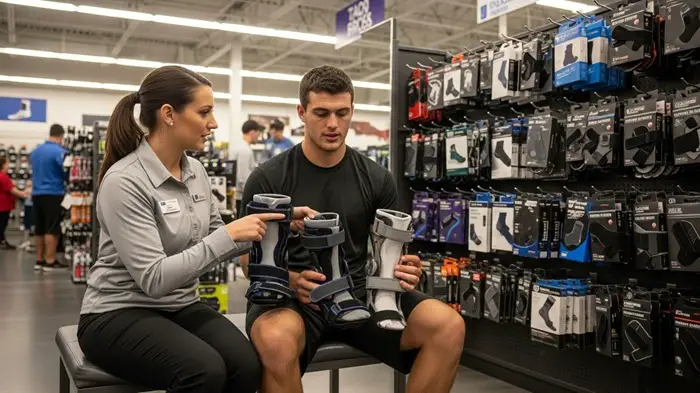
Considerations when Choosing the Best Ankle Brace for Football Players
High-impact sports like youth football and soccer require players to protect themselves completely to avoid any type of injury.
And for this reason, advanced protective gears such as helmets, gloves, knee support, ankle brace, etc. are most important for them.
However, when choosing protective accessories for sports like ankle braces, it has to be kept in mind that not all the players in the field require a similar type of gear and protection.
As every athlete on the field is assigned different positions and responsibilities, the risk (of getting injured) that comes with their position also varies.
As some players (mostly the offensive and defensive linemen) of the team are at greater risk of getting their ankle injured than others, they should choose an ankle brace carefully as per their requirement.
Below are a few important factors you essentially need to look at when choosing a high-quality ankle protector brace for soccer players…
1- Support Level Needed (Prevention vs. Recovery)
If you’ve never had an ankle injury and just want extra stability during explosive plays, a lightweight, flexible brace is usually enough.
But if you’re recovering from a sprain—especially a high-ankle sprain—you’ll need a stiffer brace with reinforced straps or hinges.
Football players dealing with lineman collisions or soccer players absorbing aggressive tackles benefit from stronger side support to limit inversion and eversion movements.
2- Brace Thickness and Cleat Compatibility
Cleats, especially soccer boots, are narrow by design. A bulky brace can distort fit, reduce traction, or create toe pressure.
Always choose a slim, low-profile brace designed for sports footwear. Many athletes size their cleats half a size up when they know they’ll use a brace regularly.
3- Freedom of Movement for Cuts, Jumps & Sprints
A good brace stabilizes without feeling like a cast. For skill positions—wide receivers, running backs, wingers, strikers—mobility is everything.
Look for designs that allow natural ankle flex while still protecting the ligaments during rapid cuts, pivots, and acceleration.
4- Breathability and Sweat Control
Football turf, hot weather, and long practices mean sweat. A brace made of breathable mesh or moisture-wicking fabric helps avoid irritation, odors, and slipping.
Ventilated materials and padded edges also prevent chafing during extended play.
5- Durability Under High-Intensity Play
Cheap braces stretch out quickly or lose Velcro grip. Choose braces with reinforced seams, sturdy eyelets, and high-quality straps.
Soccer players experience constant rubbing inside tight boots, and football players deal with turf friction—so durability matters a lot.
6- Ease of Adjustment on the Field
Halftime, quick substitutions, and unexpected loosening happen. Braces with easy lace-tightening systems or quick-pull straps let you readjust in seconds.
This is important because a loose brace is almost as risky as no brace at all.
7- Position-Specific Demands
- Skill players (WR, RB, DB, forwards, wingers): need lightweight, flexible models for agility.
- Linemen, centers, defenders: benefit from firmer support that protects against compression and rotation in tight spaces.
- Quarterbacks & midfielders: prefer balanced support—enough rigidity to prevent twists without limiting mobility.
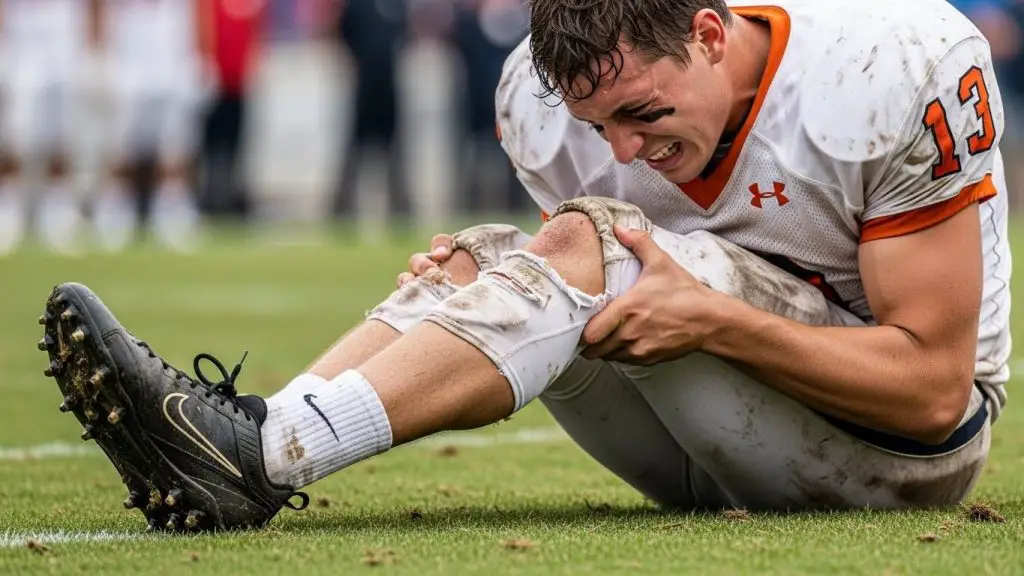
Essential Tips for Football Players to Minimize Ankle Sprains and Lower-Body Injuries
Lower-body injuries in football are often the result of weak stabilizer muscles, poor landing mechanics, or sudden high-impact movements.
By combining proper technique with targeted strength work, players can dramatically reduce the risk of ankle rolls, foot sprains, knee issues, and even high-impact collision injuries.
1. Build Strong Ankles with Stability Drills
If you think ankle strength comes just from running and playing, think again—your stabilizer muscles need targeted work.
Simple drills like standing on one leg, using a wobble board, or balancing on a Bosu ball can make a massive difference.
These exercises teach your ankle how to react quickly when you land awkwardly or cut at full speed. The better your ankle can stabilize itself on demand, the fewer “rolls” you’ll deal with during the season.
2. Strengthen the Calves, Tibialis, and Peroneals
Your lower leg is like the shock absorber of your entire body, so strengthening it pays off big time.
Calf raises (both straight-leg and bent-knee) help build power and support, while tibialis raises strengthen the front of your shin—an area most players ignore until it’s sore.
Add in peroneal band walks to reinforce the muscles on the outside of your ankle, and suddenly you’re much more resistant to those painful inversion sprains.
3. Improve Foot Strength and Arch Control
Strong feet might not sound glamorous, but they make you faster, more stable, and less injury-prone. Exercises like toe curls, short-foot drills, or even walking barefoot on grass help activate the small muscles in your feet.
These strengthen your arch, improve your grounding, and give you better control when you sprint or change direction. Think of it as tuning the foundation before you build the house.
4. Practice Proper Landing and Cutting Mechanics
A lot of sprains happen not because of bad luck, but because of bad form during landings or quick pivots.
Learning to land softly on your midfoot with your knees aligned can prevent a ton of ankle and knee problems.
Adding a slight bend in your hips and knees helps absorb impact instead of letting it travel straight to your joints.
And when it comes to cutting, slowing down a split-second before changing direction gives your body time to stabilize—protecting everything from your ankles to your ACL.
5. Strengthen the Hips and Glutes for Better Alignment
Your hips and glutes are the “control center” of your lower body. When they’re strong, your knees stay aligned, your ankles move naturally, and your entire stride becomes smoother.
When they’re weak? Everything collapses inward, and the ankle ends up absorbing stress it was never built for.
Exercises like glute bridges, lateral band walks, single-leg RDLs, and split squats build the kind of strength that keeps your movement efficient and your ankles protected during high-speed plays.
6. Increase Mobility in the Ankles and Hips
Mobility isn’t about being flexible like a gymnast—it’s about having enough range of motion to move safely during intense play.
Tight calves or stiff hips force your body into awkward angles during sprinting or jumping, which can easily lead to ankle sprains.
Spending a few minutes a day on ankle dorsiflexion stretches, calf releases, hip flexor stretches, and hamstring mobility goes a long way.
Better mobility means your body can handle sudden movements without fighting itself.
7. Use the Right Protective Gear During High-Stress Play
Even the most conditioned players use gear to stay safe—because smart protection always beats recovery time.
Ankle braces or athletic taping are great for players with a history of sprains, while good-quality cleats with proper heel and arch support can make your footing more stable.
In football, gear like knee sleeves, compression bottoms, and shin guards (for soccer) also help reduce impact injuries. Combine that with a proper warm-up routine, and you’re setting your ankles up for a safer, stronger season.
FAQs:
Do wearing ankle braces weaken my ankles?
Wearing ankle braces does not automatically weaken your ankles. When used correctly, they provide stability and help prevent injuries during high-risk movements like cutting and jumping. Problems only arise if braces are worn constantly without strengthening exercises.
For casual play—especially when dealing with quick cuts or ankle breakers for backyard football—braces can be protective while you build strength, balance, and mobility off the field.
How tight should ankle wraps be for football?
Ankle wraps should feel snug and supportive without cutting off circulation. You should still be able to move your foot naturally and feel your toes. If there’s numbness, tingling, or discoloration, the wrap is too tight.
Proper tension helps control excessive movement while allowing speed and agility, which is crucial during fast plays, sharp cuts, and sudden direction changes on the field.
Can football ankle support socks replace ankle braces or tape?
Football ankle support socks offer light compression and mild stability, making them suitable for players with healthy ankles or low injury risk.
However, they don’t provide the same level of support as braces or tape. For intense play, prior injuries, or explosive moves, socks work best as a supplement—not a replacement—for stronger support options during training or games.
Final Thoughts
Football and soccer both demand explosive movement, tight cuts, and split-second reactions, which means your ankles take more abuse than most players realize. The right ankle brace bridges the gap between mobility and protection, giving you the stability you need without slowing you down.
Whether you’re a speed-focused winger, a hard-hitting defender, or a recovering athlete getting back into the lineup, investing in quality ankle support is a smart move.
Pair it with the right protective gear—your helmet, gloves, shin guards, knee support—and you’re not just safer, you’re better prepared to play at your highest level.
In the end, a good ankle brace won’t win the game for you, but it will help ensure you stay on the field long enough to make those game-winning plays. If you treat your ankles well, they’ll return the favor every time you sprint, cut, and land. Let your gear do its job so you can focus on yours.

If you’ve ever finished a run only to feel that dull, nagging ache around your Read more

It is disheartening to reveal that foot and ankle pain in children can keep them Read more
The risk of the ankle getting injured has been common among basketball players. Fortunately, an Read more
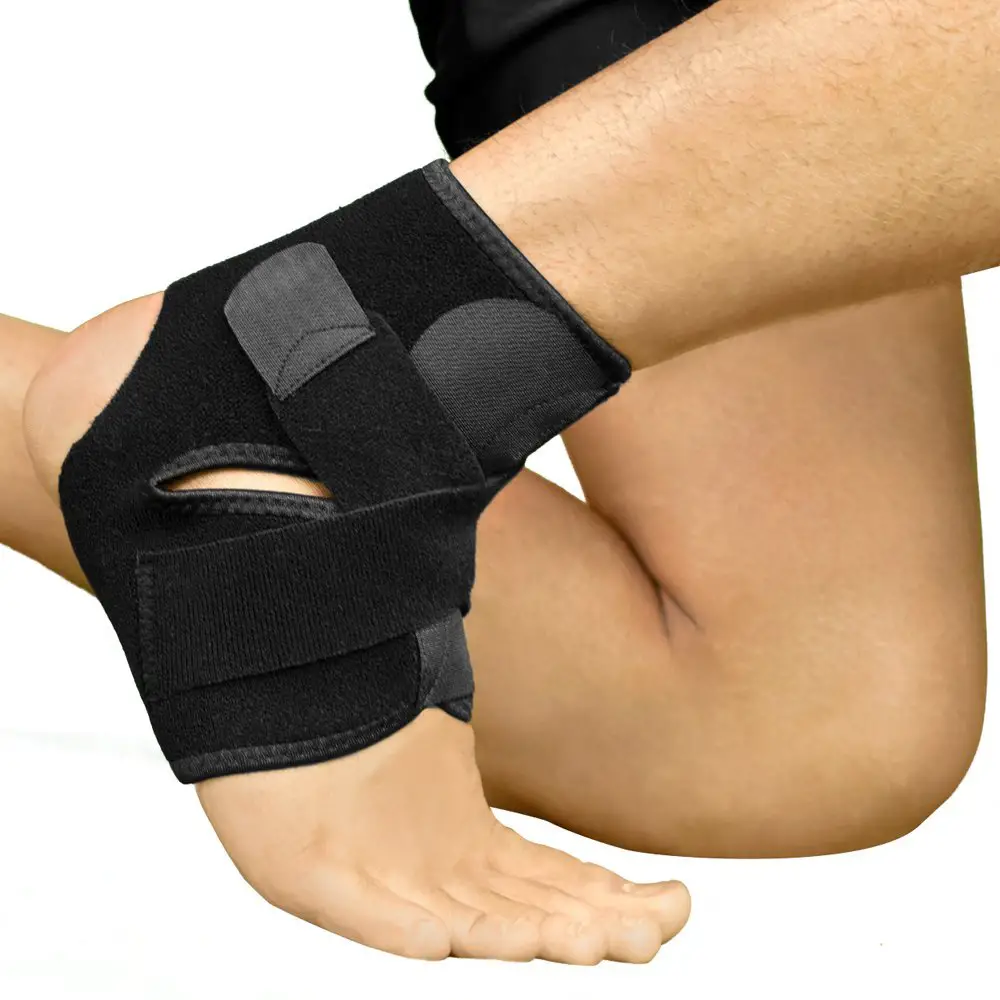
An ankle sprain is the most common issue that athletes (as well as common people Read more