

If you’ve ever sprinted across scorching sand during a beach volleyball match, you know that “hot foot” isn’t just an expression—it’s a painful reality.
Sand socks were invented for that exact reason: to save your feet from the blazing heat, hidden shells, and tiny coral fragments lurking in the sand. But can they actually improve your volleyball performance?
Let’s dig deeper (pun intended) into what makes these lightweight foot protectors so popular among players who live and breathe the beach game.
What are Sand Socks?
Sand socks are a type of performance footwear designed specifically for beach and sand sports such as volleyball, soccer, and even beach running.
Think of them as a sleek cross between neoprene booties and athletic socks—only lighter, snugger, and much more breathable.
How they’re made?
Most modern sand socks are made using neoprene, the same material used in wetsuits.
This synthetic rubber is prized for its flexibility, quick-drying nature, and ability to provide insulation without trapping too much heat.
The sole area typically has a durable rubberized or silicone coating, which gives you extra traction on slippery or shifting sand.
The upper part, on the other hand, is made from a blend of spandex, lycra, or polyester, ensuring a snug, second-skin fit.
Some premium models like Freddy Feet sand socks even use multi-layered construction—combining thin neoprene with reinforced toe and heel panels—to resist abrasion from repeated slides and dives.
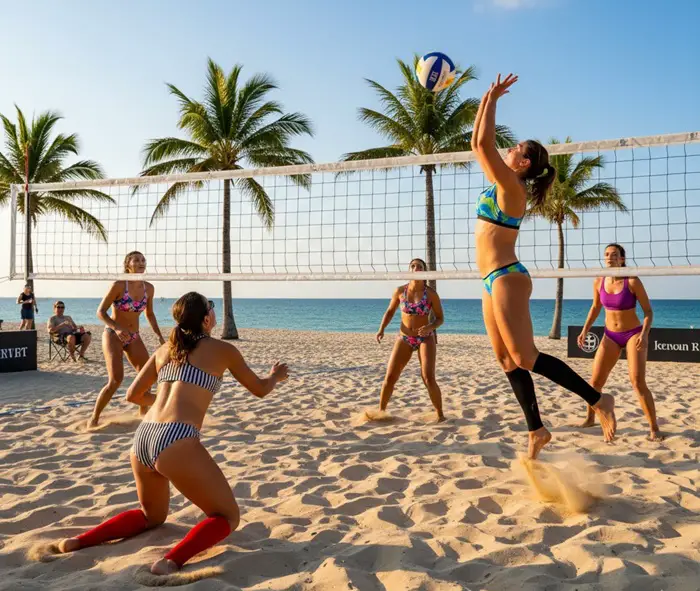
Different Types of Sand Socks
- Lightweight Sand Socks – Ideal for warm conditions. These prioritize breathability and quick drying.
- Mid-weight or Neoprene Sand Socks – Offer more insulation and protection from cold, wet, or coarse sand.
- High-ankle Sand Socks – Prevent sand from sneaking in during intense play; great for tournaments and long sessions.
- Low-cut Sand Socks – Preferred by casual players who want freedom and a minimal feel.
Whether you’re wearing the best sand socks for volleyball or an entry-level pair, the right type depends on the playing surface, weather, and personal comfort.
Benefits of Wearing Sand Socks for Beach Volleyball
Sure, they protect your feet—but there’s more to the story. Here’s how sand socks can genuinely upgrade your performance.
1. Protection from Heat and Cold
Beach sand can easily reach temperatures above 45°C (113°F) under the afternoon sun. Sand socks insulate your feet from direct heat, preventing blisters and burns.
On the flip side, they also provide a layer of warmth during early-morning or off-season matches when the sand feels like ice.
2. Improved Grip and Traction
Without socks, your feet constantly slide through loose sand, making it hard to stabilize for serves or spikes.
The rubberized sole of sand socks offers subtle traction—enough to grip the sand just slightly so you can accelerate or pivot faster.
This improved balance often translates into more controlled movements and less fatigue over long rallies.
3. Reduced Abrasion and Cuts
Beach sand hides sharp shells, rocks, and coral fragments that can slice your skin during dives. Sand socks act as a soft but resilient barrier.
The neoprene construction prevents micro-cuts and reduces friction burns from sliding plays.
4. Faster Recovery and Foot Support
Good sand socks slightly compress the foot and ankle, which can improve circulation and reduce swelling during extended games.
Some players report less post-match soreness thanks to the subtle compression and cushioning effect.
5. Hygiene and Comfort
If you’ve ever played on public beaches, you know sand isn’t always pristine. Sand socks help keep your feet cleaner, preventing contact with bacteria or fungal contaminants.
Plus, they stop sand from wedging between your toes—a huge relief for anyone who’s spent half a set shaking it out.
In short, sand socks don’t just protect—they optimize your footing and extend your comfort window, especially during tournaments.
That’s why many professionals quietly swear by the best beach volleyball socks as part of their essential gear.
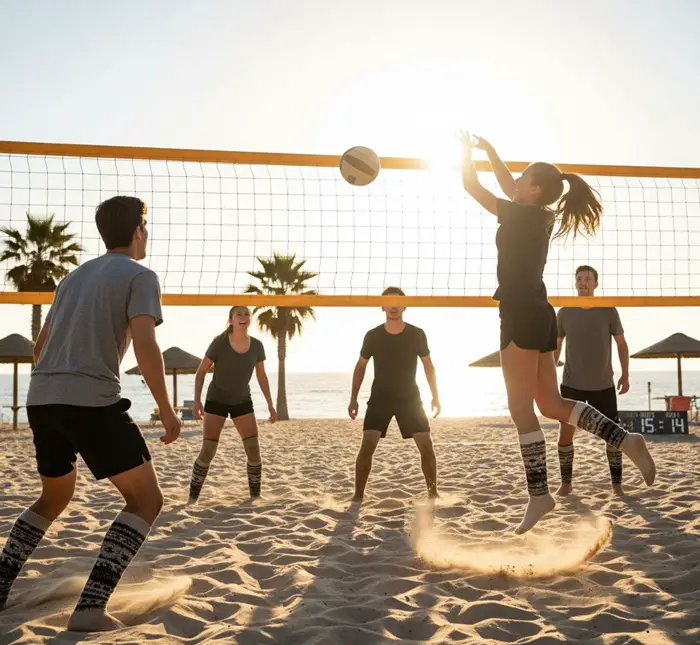
Cotton vs. Wool Socks in Summer: What’s Better for Sand Volleyball?
You might be tempted to grab a pair of regular cotton socks for your next beach game—but that’s a rookie mistake.
Cotton may feel soft initially, but once it gets wet, it becomes your worst enemy.
Why cotton fails on sand?
Cotton absorbs moisture—lots of it. Sweat, seawater, or humidity gets trapped, turning your socks into damp sand magnets.
They become heavy, lose elasticity, and create friction hotspots. In hot conditions, that means blisters and skin irritation within minutes.
Why wool (specifically merino wool) wins?
Merino wool, surprisingly, is one of the best natural fibers for moisture management—even in summer. It’s temperature-adaptive: it keeps your feet cool when it’s hot and warm when it’s cold.
Unlike cotton, wool fibers wick moisture away from your skin and dry quickly.
Merino’s natural antibacterial properties also fight odor—a blessing after a sweaty two-hour match.
Some hybrid sand socks even blend merino wool with spandex or lycra, offering flexibility with moisture control.
Still, the gold standard remains neoprene-based sand socks, since they’re designed for both protection and performance.
If you must choose between cotton and wool for sand volleyball, go with lightweight merino or synthetic athletic socks that mimic its wicking ability.
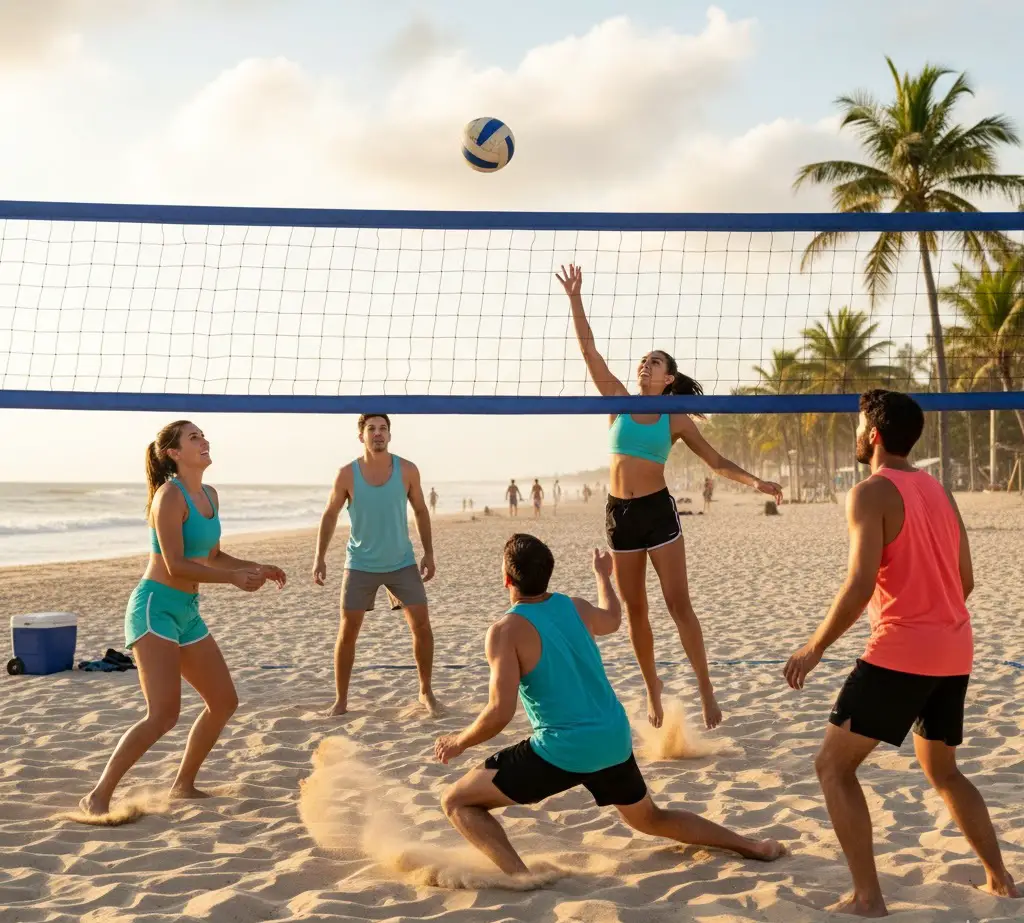
Other Beach Volleyball Outfits and Accessories for Better Performance in Sand
The right sand volleyball outfits can make the difference between an average and an outstanding performance.
Beyond your trusty sand socks, here’s a breakdown of what elite players wear to stay agile, protected, and confident.
1. Performance shorts and tops
Look for moisture-wicking compression wear or quick-dry athletic fabrics like nylon-spandex blends.
Compression shorts help reduce muscle vibration, delay fatigue, and keep sand from sticking to sweaty skin.
Many professional beach volleyball outfits use UV-protective fabric rated UPF 50+ to shield against sunburn.
2. Sunglasses and caps
A polarized pair of sports sunglasses is a must. They reduce glare from the water and sand, helping you spot the ball clearly during high-angle serves.
Caps or visors keep sweat out of your eyes and offer shade during long games.
3. Knee and elbow guards
Sand might look soft, but repeated dives can take a toll. Lightweight neoprene or foam guards prevent scrapes and bruises without restricting movement.
Bonus: they can match your sand socks for a coordinated pro look.
4. Anklets or ankle support sleeves
Many players use compression ankle sleeves under their sand socks for extra stability. Since beach volleyball involves frequent jumps and pivots, a bit of ankle support can help prevent sprains.
5. Sunscreen and hydration gear
Not exactly clothing, but just as critical. Choose a broad-spectrum SPF 50 sunscreen that’s sweat-resistant and reapply every two hours. And stay hydrated—dehydration is a silent performance killer.
When you assemble the right combination of gear—from breathable tops to the best sand socks for volleyball—you’re not just dressing for style, you’re dressing for control, comfort, and endurance.
Final Thoughts
So, can wearing sand socks improve your volleyball game? Absolutely. They’re not just a fancy beach accessory; they’re performance gear designed with biomechanical insight.
They reduce slippage, protect from burns and cuts, regulate temperature, and keep your feet stable—all while feeling practically invisible once you start playing.
Whether you go for neoprene or merino blends, lightweight or reinforced, the best approach is to choose socks that complement your playing conditions.
Brands like Freddy Feet sand socks have nailed the balance between comfort and durability, making them favorites among both recreational and professional athletes.
Pair them with functional beach volleyball outfits, polarized sunglasses, and a smart hydration strategy, and you’ve got yourself the full kit for victory on the sand.
Because when your feet are happy, your spikes hit harder, your dives feel smoother, and your game—well, it just feels a little more unstoppable.


Athletes are always searching for small performance edges—those tiny tweaks that can make training more Read more
If you’re a regular runner, you already know the difference a good pair of socks Read more
Regardless of the fact that everyone wants cotton, remember it doesn’t absorb moisture like synthetic Read more

They’re invisible, practical, and a quiet revolution in modern footwear — no-show socks are the Read more